
The Challenge of Heating Large Commercial Spaces
Heating large commercial facilities—like warehouses, distribution centers, greenhouses, and event venues—is no small feat. Commercial heater selection becomes a strategic decision that impacts not just comfort but operational efficiency, energy bills, and long-term profitability.
Choosing the right heating approach requires more than picking a product off a shelf. It involves understanding building characteristics, insulation, airflow, usage patterns, and local climate conditions. In this guide, we’ll break down actionable strategies that HVAC professionals, facility managers, and procurement leads can use to select the best heating systems for large-scale applications.
If you’re in the early stages of planning, also see Early Planning for Heating Solutions.

Understanding the Needs of Large Spaces
Why Large Spaces Require Specialized Heating
Traditional residential heaters just don’t cut it in these kinds of environments. Wide open spaces, high ceilings, constant door activity—all these add up to major heat loss and inefficiencies if you’re using the wrong kind of system.
That’s why commercial heater selection matters. You’re dealing with a different scale altogether.
Key Considerations

- Ceiling height and stratification
- Airflow and insulation
- Zoning requirements
- Fuel availability and energy cost
- Safety regulations and certifications (e.g., CE)
Need a refresher on heating systems? Try our Heater Types Comparison guide.
Types of Heaters Suitable for Large Commercial Spaces
Before diving into specific examples, it’s important to understand the general categories available for large-scale applications—whether radiant, forced air, electric, or hybrid systems.
Radiant Tube Heaters

Radiant tube heaters are well-suited for large, tall buildings. These heaters use infrared energy to warm people and objects—not the air—so they’re highly efficient in spaces where warm air would otherwise just rise and escape.
A great example is our Radium Radiant Tube Heaters, designed for durability and optimized performance in industrial environments.
Use cases: Warehouses, airplane hangars, shipping bays.
Gas Unit Heaters
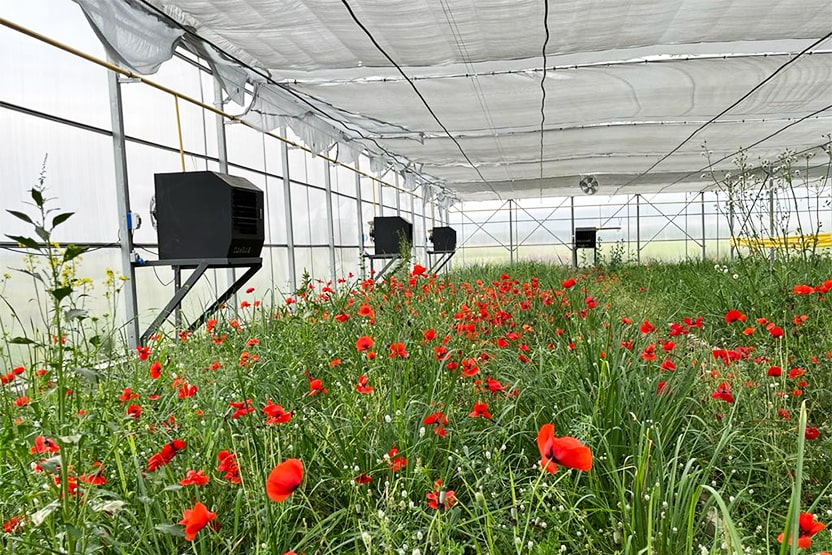
Gas unit heaters work by forcing warm air into a space, ideal for rapid temperature rise and widespread coverage.
Our Lodos Gas Unit Heaters use forced air to distribute heat fast and wide. They’re great where you need quicker warm-up or where multiple rooms need to be covered.
Use cases: Commercial garages, factories, distribution hubs.
Ceramic Radiant Heaters
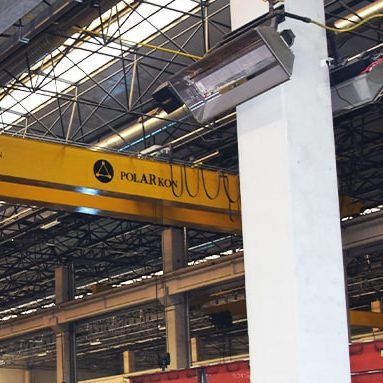
Ceramic radiant heaters emit high-intensity infrared heat and are suited for targeted spot heating in challenging environments.
Our DSR Ceramic Radiant Heaters deliver targeted comfort and efficiency in the toughest environments. These heaters are ideal for focused, high-efficiency heating—especially in spaces where people aren’t moving around constantly. They are compact yet powerful.
Use cases: Agriculture, greenhouses, warehouses with static zones.
Also useful in: Energy-Efficient Greenhouse Heaters.
Electric Heaters

Electric heaters are useful for smaller spaces or where gas is not available or allowed. They offer silent operation and simple installation.
Our Solis Electric Heaters can be a smart choice for smaller commercial zones or as supplementary heat sources. They’re especially handy where gas isn’t an option.
Use cases: Cafés, reception areas, indoor kiosks.
More on applications: Outdoor Heating Design Trends
Smart Heating Strategies for Commercial Buildings
Zoning: Heat Where It’s Needed
Use zoning to avoid over-heating low-traffic areas. Install programmable Control Units and pair them with sensors to make real-time adjustments. Especially useful in dynamic workspaces.
Combine Heating Methods
One-size-fits-all doesn’t apply here. Mix radiant heaters for static zones with gas units for larger dynamic areas. This hybrid approach reduces waste.
Learn more: Best Heater for Business
Automate and Optimize
Use thermostats, motion detectors, and connected systems. Explore our Accessories for options. Don’t underestimate how much efficiency a well-calibrated control system can add.
Also see: Energy Efficiency in Heaters
Safety and Compliance
Before anything else, safety.
Any commercial installation must adhere to local laws and EU-wide certifications. Look for CE-marked equipment and be sure to follow manufacturer guidelines. Daygas products meet EU compliance standards.
Need specifics? Read: CE Certification for Heating Products
And remember—Waste Gas Sets are a must for any gas heating setup. They manage emissions and improve safety.
Cost-Benefit Considerations
Short-Term vs. Long-Term Cost
It’s tempting to go for the cheapest upfront cost—but look at fuel efficiency, maintenance needs, and lifespan too. It’s often smarter to invest a little more in high-efficiency equipment.
Maintenance Planning
DSR and Radium systems tend to have fewer moving parts. This means fewer breakdowns and lower service costs over time.
Explore: Best Way to Heat a Warehouse
Mistakes to Avoid
- Don’t oversize your heater—you’ll waste energy.
- Avoid ignoring airflow or natural ventilation.
- Don’t forget to plan for routine maintenance access.
Need a deeper breakdown? Portable vs Fixed Heaters gives more context.
Final Thoughts
Smart commercial heater selection isn’t about picking the most powerful unit. It’s about making a tailored choice that fits your space, energy goals, and growth plans.
With options like DSR ceramic systems, Lodos gas units, Radium radiant heaters, and smart controls, your system can scale and adapt to evolving needs.
Not sure where to start? Talk to Daygas and we’ll help you navigate your options.