
As outdoor heating becomes essential for cafés, restaurants, and commercial patios year-round, safety remains a top concern—especially when installing heaters in covered or semi-enclosed areas. Whether you’re using electric infrared heaters, ceramic radiant models, or gas patio units, understanding the required safe distances for patio heaters is critical to avoiding fire hazards, maintaining compliance, and protecting your guests and staff.
This guide will help you determine the correct clearance guidelines based on heater type, mounting style, structure material, and airflow conditions—ensuring your outdoor heating setup is both safe and efficient.
Why Safe Distances for Patio Heaters Matter

Every commercial outdoor space is different, but the risks of improper heater placement are universal. Inadequate clearance can lead to:
- Fire hazards from heat buildup or material ignition
- Heat damage to walls, ceilings, or furniture
- Inefficient performance due to airflow restrictions
- Voided warranties or insurance violations
When dealing with covered patios, there’s less ventilation and more exposure to flammable surfaces like wood beams, fabric awnings, or plastic sheeting. Therefore, it’s vital to follow specific manufacturer and regional safety guidelines.
General Clearance Guidelines by Heater Type
| Heater Type | Minimum Clearance (Top) | Side Clearance | Bottom Clearance | Notes |
|---|---|---|---|---|
| Ceramic Radiant Heaters | 40–60 cm | 30–60 cm | 180–200 cm | Use wall/ceiling brackets only |
| Electric Infrared Heaters | 30–50 cm | 20–40 cm | 180 cm | Good for semi-enclosed patios |
| Gas-Fired Patio Heaters | 90–120 cm | 60 cm+ | Floor-mounted | Must be used in fully ventilated areas only |
⚠️ Always consult the technical manual or installer guide that comes with your heater. These are general guidelines and may vary depending on model, mounting, and fuel type.
Can You Use Heaters in Covered Patios?
Yes—but with proper planning.
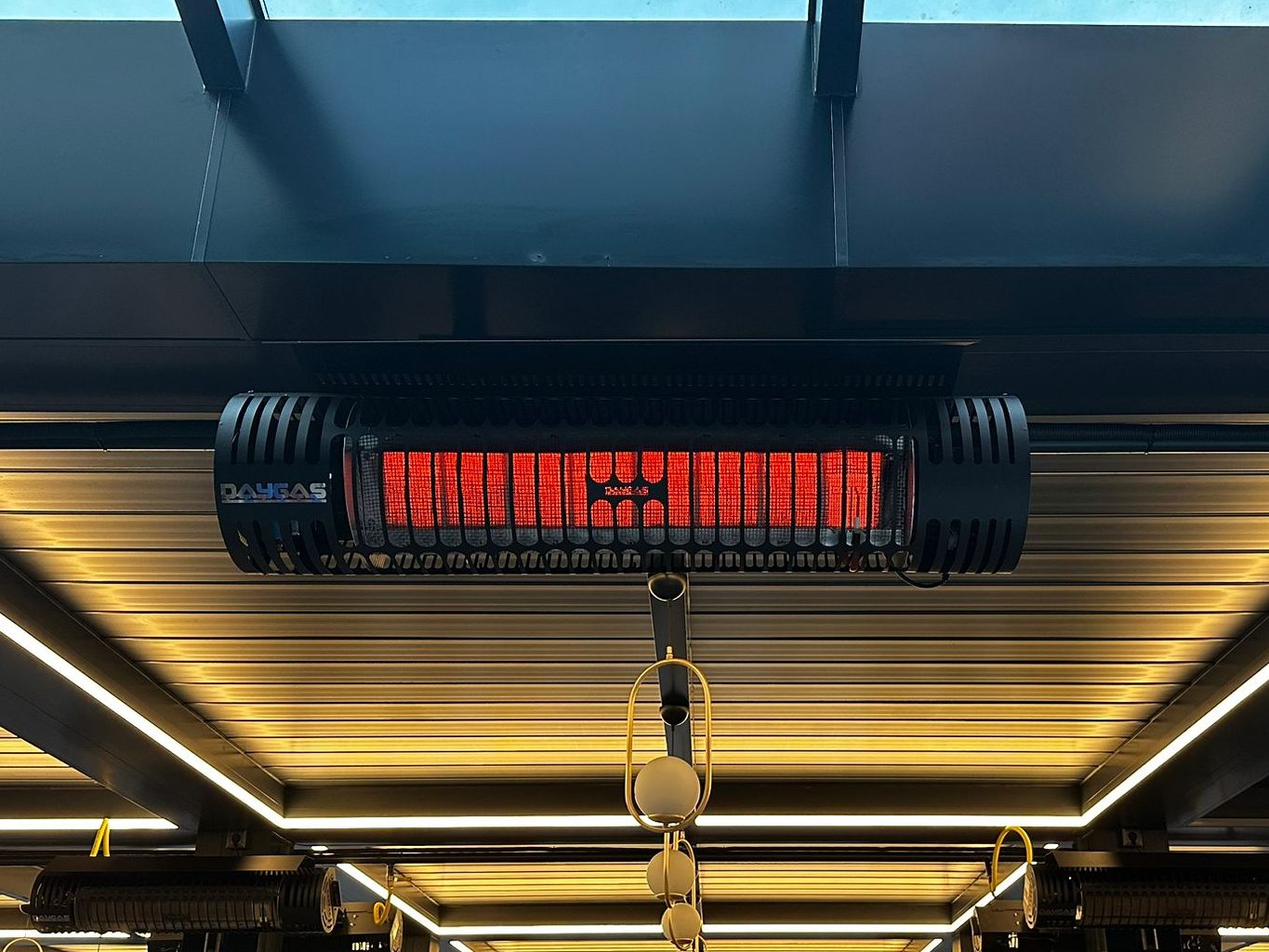
Covered patios introduce challenges that open-air spaces don’t, such as:
- Limited ventilation
- Combustible roofing materials
- Restricted mounting space
If your patio is covered with materials like polycarbonate, wood, or fabric, choose heaters that offer:
- Low surface temperatures
- Directional heat output
- Wall or beam mounting options
DSR Ceramic Radiant Heaters are ideal in these cases, offering safe, focused heating with minimal emissions and compact installation.
Where to Mount Heaters on a Covered Patio
Proper positioning enhances both safety and heating coverage. Follow these best practices:
- Wall Mount: Ideal for radiant heaters—keeps distance from ceiling and allows directional heat
- Ceiling Mount: Only for heaters designed with upward clearance space
- Pole/Beam Mount: Ensure non-combustible material and correct anchoring
- Avoid fabric awnings, wood beams, or plastic sheeting above gas units
Need installation help? Read our guide on early planning for heating solutions
Safe Use Tips for Covered Patio Heating
- 🔧 Use CE- and ERP-certified heaters only for compliance and safety
- 💡 Install windbreaks or reflectors to increase heat efficiency and control direction
- 🧯 Keep fire extinguishers and gas shutoff valves accessible nearby
- 🧰 Schedule regular inspections of mounting brackets, wiring, and gas connections
- 🚫 Never block heaters with furniture, umbrellas, or drapes
See why CE certification matters when buying heating products
How DAYGAS Heaters Offer Safe Clearance and Compliance
At DAYGAS, we provide heating systems engineered with clearance safety and commercial use in mind.
Our heaters are:
- ERP- and CE-certified
- Designed for commercial outdoor installations
- Built with safety shutdowns and protective housing
- Offered with wall, beam, or ceiling brackets for correct spacing
Explore our most popular outdoor-safe models:
📩 Questions? Contact our experts at info@daygas.eu
🌐 Browse our full lineup: www.daygas.eu
Frequently Asked Questions
What is the minimum clearance above a patio heater?
Most models require at least 40–90 cm above the heater. Check your unit’s specifications.
Can I use patio heaters under a pergola or awning?
Yes, but only with electric or radiant models, not gas. Avoid low-hanging or flammable coverings.
Are ceiling-mounted heaters safe for covered patios?
Only if there’s enough clearance and the ceiling material is non-combustible. Use certified brackets.
Do electric patio heaters need ventilation?
No. Unlike gas heaters, electric infrared heaters produce no fumes and are ideal for enclosed or semi-enclosed patios.
What type of heater is safest for covered spaces?
Electric infrared heaters and ceramic radiant heaters offer flame-free operation and directional warmth—perfect for covered zones.
Related DAYGAS Blog Posts
- Do Outdoor Heaters Work in the Winter?
- Top Tips for Outdoor Heater Safety
- Best Heater for Business
- Heater Types Comparison