

In the European market, CE certification for outdoor heaters is not optional — it’s a legal and technical requirement. Whether you’re a distributor, installer, or facility manager, understanding and maintaining compliance with CE directives ensures product safety, performance reliability, and uninterrupted market access.
This article explains how to achieve and verify CE compliance in outdoor heating installations. Also why it’s essential for business success.
Understanding CE Certification for Outdoor Heaters
CE certification (Conformité Européenne) is the European Union’s mark of conformity that indicates a product meets all applicable health, safety, and environmental protection requirements.
When it comes to outdoor and commercial heaters, several directives apply depending on the technology used:
- Gas Appliance Regulation (GAR) (EU) 2016/426: covers gas-fueled heaters such as Daygas DSR and Lodos series.
- Low Voltage Directive (LVD) 2014/35/EU: applies to electrical devices such as Solis heaters.
- Electromagnetic Compatibility (EMC) Directive 2014/30/EU: ensures electronic products do not interfere with other devices.
For official reference, see the EU CE certification portal.
These directives collectively form the foundation of CE certification for outdoor heaters, ensuring both safety and interoperability across all EU member states.
Why CE Compliance Matters for Businesses
For businesses operating within or exporting to the EU, CE compliance is more than a formality — it’s a prerequisite for market entry.
Key business reasons to maintain CE compliance include:
- Legal conformity: CE marking is mandatory to sell or distribute heaters in the European Economic Area.
- Safety assurance: Certified products reduce liability risk and ensure operator protection.
- Brand credibility: Compliance signals professionalism and builds trust among partners and end users.
- Traceability and accountability: In case of inspection, CE documentation demonstrates due diligence.
Distributors and installers who work exclusively with CE-certified equipment safeguard themselves from legal disputes, warranty issues, or installation failures.
Step-by-Step Guide to CE Certification for Outdoor Heaters
To achieve CE certification for outdoor heaters, manufacturers and importers must follow a structured, evidence-based process:
- Identify applicable EU directives (e.g., GAR, LVD, EMC).
- Perform a conformity and risk assessment to ensure all components meet the required safety standards.
- Compile technical documentation — this includes design data, material specifications, performance test results, and user manuals.
- Engage a notified body for independent product testing and certification where required.
- Issue the Declaration of Conformity (DoC) confirming full compliance.
- Affix the CE mark visibly on the product and within the user manual.
Each of these steps ensures full CE certification for outdoor heaters across both domestic and industrial applications, supporting safe and standardized installations throughout Europe.
CE Compliance in Outdoor Heater Installations
Even after certification, installation practices play a critical role in maintaining CE validity.
Installers, contractors, and facility engineers must follow:
- Manufacturer installation manuals – improper setup can void certification.
- Ventilation and clearance requirements – especially for gas-based heaters.
- Electrical safety measures – for wiring, grounding, and circuit protection in electric heaters.
How Daygas Ensures CE Certification Across All Product Families
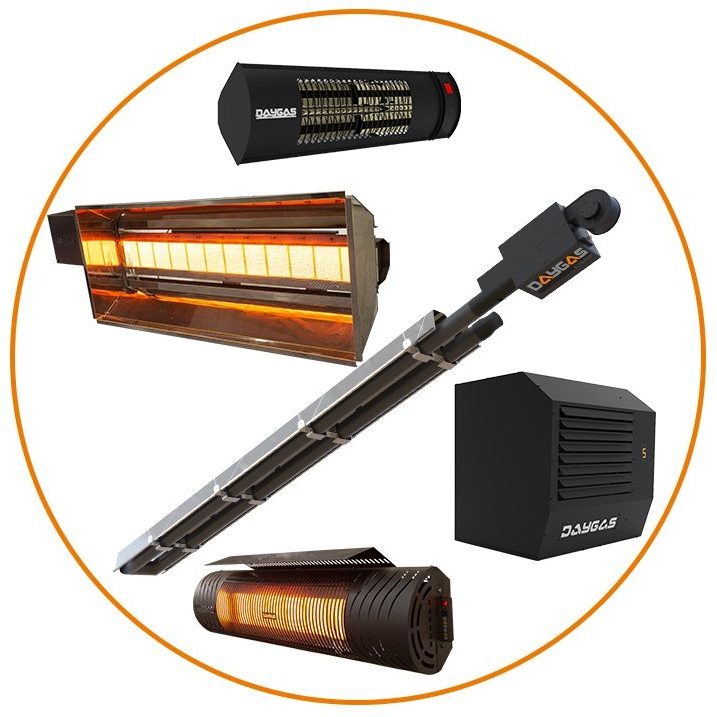
Daygas is committed to full regulatory transparency and rigorous internal testing. Every product line undergoes certification and inspection in compliance with relevant EN standards.
| Product Family | Type | Key CE Directives | EN Standards Applied |
|---|---|---|---|
| Solis Electric Heaters | Electric | LVD, EMC | EN 60335-1, EN 60335-2-30 |
| DSR Ceramic Radiant Heaters | Gas | GAR | EN 416 |
| Radium Radiant Tube Heaters | Gas | GAR | EN 419 |
| Lodos Gas Unit Heaters | Gas | GAR | EN 621, EN 1020 |
Learn more about our product families:
- Ceramic Radiant Heaters (DSR): https://daygas.eu/ceramic-radiant-heaters-3/
- Radiant Tube Heaters (Radium): https://daygas.eu/radiant-tube-heaters/
- Gas Unit Heaters (Lodos): https://daygas.eu/gas-unit-heater/
- Electric Heaters (Solis): https://daygas.eu/electric-heater/
Common Mistakes That Void CE Compliance
Even certified heaters can lose compliance status if not handled or installed properly. Common errors include:
- Design modification after certification without re-testing.
- Improper installation, such as inadequate ventilation or unauthorized parts.
- Missing documentation, including the Declaration of Conformity or operating manual.
- Component substitution without updated testing or verification.
To avoid such risks, Daygas provides partners and installers with access to verified technical documentation and CE conformity records upon request.
Final Thoughts – CE Certification as a Competitive Advantage
CE certification represents far more than regulatory paperwork — it’s a mark of safety, reliability, and quality. For manufacturers and distributors, it opens access to the European market and provides customers with confidence in their chosen heating systems.
At Daygas, compliance is part of our manufacturing DNA. Every Solis, DSR, Radium, and Lodos heater is CE-marked, performance-tested, and supported by official documentation that proves adherence to European directives.
👉 Ensure your next outdoor heating installation meets EU standards. Explore Daygas’ CE-certified products and request full technical documentation from our expert support team at https://daygas.eu/contact-us/.
FAQ: CE Certification for Outdoor Heaters
What directives apply to CE certification for outdoor heaters?
Gas heaters fall under the Gas Appliance Regulation (EU) 2016/426, while electric heaters must comply with the Low Voltage Directive (2014/35/EU) and EMC Directive (2014/30/EU).
Who is responsible for CE compliance—the manufacturer or the installer?
The manufacturer or importer is primarily responsible for CE certification. However, installers must follow official installation and maintenance instructions to maintain compliance.
How long does CE certification remain valid?
Certification remains valid as long as the product design and components remain unchanged, and relevant EU directives are still applicable.
Can modifications void CE marking?
Yes. Any alteration to a CE-certified product — such as changes to burners, electrical components, or housing — requires a new conformity assessment.
🔗 knowledge & Resources
Internal Links:
- DSR Ceramic Radiant Heaters: https://daygas.eu/ceramic-radiant-heaters-3/
- Solis Electric Heaters: https://daygas.eu/electric-heater/
External Links:
- EU CE Marking Portal: https://single-market-economy.ec.europa.eu/single-market/ce-marking_en
- Notified Body Directory: https://nando.cen.eu/
- European Commission GAR Guidance: https://ec.europa.eu/docsroom/documents/39484