
If you’ve ever shivered under a patio heater and thought, “Is this thing even on?”, you’ve felt firsthand the impact of choosing the wrong BTU level. That rais the question what BTU is best for a patio heater? But what is BTU even what does it mean?
BTU — British Thermal Unit — is the measure of how much heat a heater can produce in an hour. Higher BTU means more heat, but that doesn’t automatically mean better. Pick too high, and you may waste energy. Pick too low, and your guests will be reaching for blankets.
In this guide, we’ll explain how BTU works in practical terms, show you how to calculate what you actually need, and match BTU ranges to the right types of patio heaters — with examples from our Daygas product range.
Understanding BTU in Simple Terms
Think of BTU as the horsepower of heat:
- Low BTU – Gentle warmth, like a desk lamp on your hands
- Medium BTU – Steady comfort, like spring sunshine
- High BTU – Powerful blast, like standing near a campfire
For patio heaters, BTU measures total hourly heat output. The goal is to hit the sweet spot: enough warmth for comfort, without wasting fuel or overshooting your needs.
How to Calculate the Best BTU Patio Heater for Your Space
The right best BTU patio heater choice depends on three main factors:
- Size of your space – Length × width = total area in m² (or square feet for U.S. readers).
- Ceiling height & enclosure – Higher ceilings or open-air layouts require more BTUs.
- Temperature rise needed – How many degrees warmer you want the space to feel.
Quick formula:
Area (m²) × Desired temperature rise (°C) × 5.38 = BTUs needed
(For imperial, use area in square feet and adjust with BTU conversion.)
For a quick check, you can also use the U.S. Department of Energy BTU Calculator.
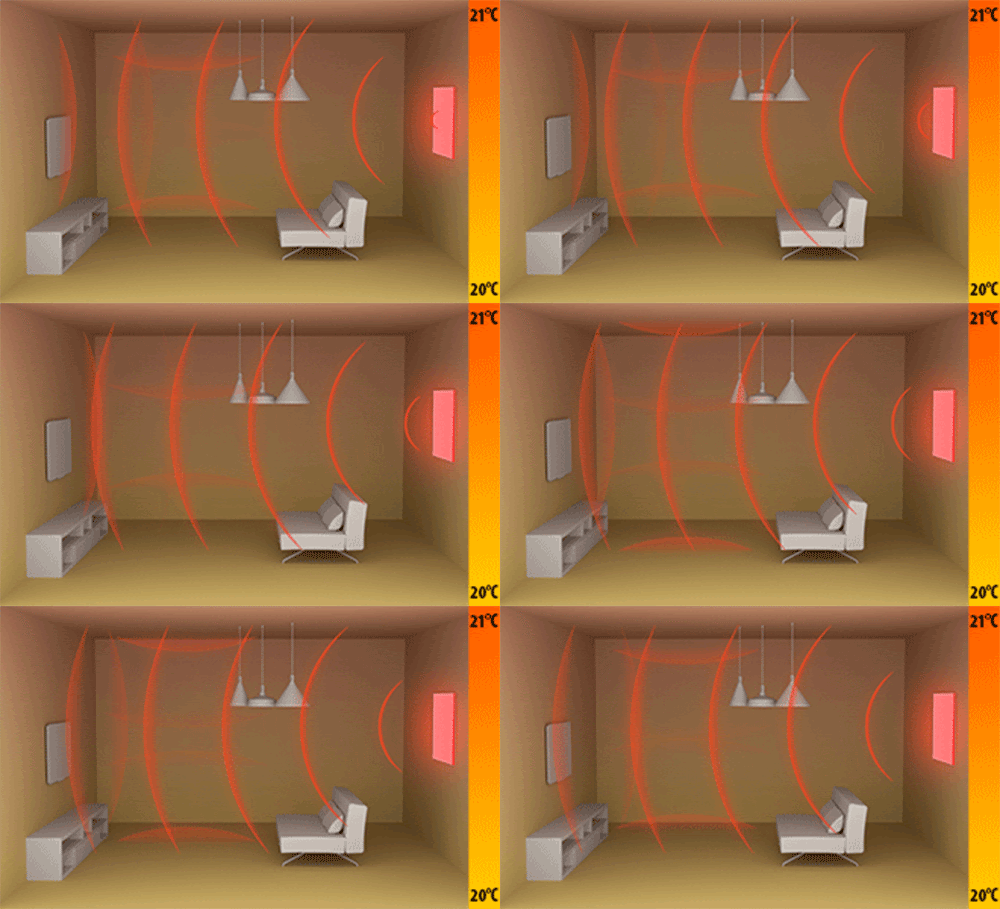
Matching BTU to Patio Size
| Patio Size (m²) | Approx. BTU Needed | Example Heater Type | Daygas Example |
|---|---|---|---|
| 5–10 m² (54–108 sq ft) | 5,000–10,000 | Compact infrared electric heater | Solis Electric Heater – efficient, targeted warmth |
| 10–20 m² (108–215 sq ft) | 12,000–20,000 | Medium gas ceramic heater | DSR LCD Series – strong performance for medium terraces |
| 20–40 m² (215–430 sq ft) | 20,000–40,000 | Stylish, multi-burner gas heater | DSR Premium Gas Heater – even heat for café seating |
| 40+ m² (430+ sq ft) | 40,000+ | High-output unit heater | Lodos Gas Unit Heater – covers large semi-open commercial areas |
Note: BTU ranges are estimated from each product’s kW rating (1 kW ≈ 3,412 BTU).
Why BTU Isn’t Everything
Two heaters with the same BTU rating can feel very different depending on heat delivery method:
- Radiant ceramic heaters (like the DSR Series) direct heat straight to people and objects, so you can often choose a lower BTU and still feel warmer.
- Infrared electric heaters (like Solis) provide instant heat without warming the surrounding air, making them ideal for breezy patios where convective heat would be lost.
More on this in our Heater Types Comparison.
Balancing Energy Efficiency and ROI
The best BTU patio heater also has to make financial sense:
- Gas heaters are usually more cost-effective for high-BTU needs over long hours.
- Electric heaters excel in control, precision, and zero on-site emissions — ideal for enclosed or urban spaces.
You can explore more cost comparisons in our Energy Efficiency Blog and Outdoor Heating Profitability Guide.

Final Takeaways
- Match BTU output to your patio size and conditions — bigger isn’t always better.
- Choose radiant heaters for targeted warmth and efficiency.
- Consider both fuel type and ROI, not just BTU numbers.
✅ Small, enclosed terrace – Solis Electric Heater for precise, quiet heating
✅ Medium outdoor dining – DSR Premium or DSR LCD for reliable, stylish warmth
✅ Large semi-open commercial space – Lodos Gas Unit Heater for high-output efficiency
Additional knowledge
- BTU Basics & Heating Output – U.S. Department of Energy:
https://www.energy.gov/energysaver/heat-and-energy-meters
(Explains how BTU relates to heating performance and energy efficiency.) - Patio Heater Buying & Safety Guide – Consumer Product Safety Commission (CPSC):
https://www.cpsc.gov/Safety-Education/Safety-Education-Centers/Outdoor-Heating
(Covers safety standards and considerations when buying or using patio heaters.)
About Daygas
Daygas delivers certified heating solutions for residential, commercial, and industrial applications across Europe and the Balkans.
Explore our full range: