
Why Understanding Heater Types Matters
Choosing the right heating system is essential for efficiency, cost savings, and comfort in industrial and commercial spaces. Whether you’re heating a warehouse, factory, office, or outdoor area, selecting the right types of heater affects energy consumption, heat distribution, and overall performance.
The three most common heater types are:
- Convection Heaters – Heat the air and distribute it throughout the space.
- Radiant Heaters – Heat objects and surfaces directly.
- Infrared Heaters – A form of radiant heating that provides targeted and efficient warmth.
Each type has unique advantages depending on the size, insulation, and purpose of the space.
This guide will explore:
- How each heater type works 🔥
- Efficiency and heat distribution differences ⚡
- Best applications for each heating method 🏭
- Which Daygas heating solutions fit your needs best
How Do Convection, Radiant, and Infrared Heaters Work?
🌬 Convection Heaters: Heating the Air
Convection heaters work by warming the air, which then circulates to heat an entire space.

How It Works:
1️⃣ The heater warms the air using a heat exchanger or electrical element.
2️⃣ Warm air rises while cool air is drawn in to be heated.
3️⃣ A fan or natural airflow distributes heat across the room.
Pros & Cons of Convection Heaters:
✔ Effective for heating entire rooms evenly.
✔ Ideal for enclosed, well-insulated spaces.
❌ Heat loss occurs when doors or windows open.
❌ Slower heating response compared to radiant or infrared heaters.
💡 Best For: Warehouses, offices, enclosed retail spaces, and factories where consistent room-wide heating is required.
🔗 Recommended Solution: Lodos Gas Unit Heater – A high-efficiency convection heater designed for industrial spaces.
🔥 Radiant Heaters: Direct Heat for Objects & Surfaces

Radiant heaters emit infrared radiation, which directly warms objects and people rather than the air.
How It Works:
1️⃣ The heater emits infrared waves from a heated surface.
2️⃣ Heat is absorbed by objects, walls, and floors.
3️⃣ Warmed objects slowly release heat into the surrounding area.
Pros & Cons of Radiant Heaters:
✔ More energy-efficient than convection heaters in open or drafty spaces.
✔ Immediate warmth without waiting for air to warm up.
❌ Limited heat coverage—best for localized heating.
❌ Less effective in fully enclosed, insulated areas where convection may work better.
💡 Best For: Warehouses, workshops, loading docks, greenhouses, and semi-outdoor spaces where air movement makes convection heating inefficient.
🔗 Recommended Solution: Radium Radiant Tube Heater – A high-performance radiant heating system for large, open industrial environments.
☀ Infrared Heaters: A Specialized Type of Radiant Heating
Infrared heaters are a subtype of radiant heaters, designed for high-efficiency targeted heating.
How It Works:
1️⃣ The heater emits short or long-wave infrared radiation.
2️⃣ Objects and people absorb the heat instantly.
3️⃣ Stored heat is gradually released, reducing energy waste.
Pros & Cons of Infrared Heaters:
✔ Extremely efficient—converts up to 95% of energy into heat.
✔ Perfect for semi-outdoor and industrial settings where air heating is ineffective.
❌ Limited heating radius—requires strategic placement.
❌ Less effective in high-ceiling spaces without direct exposure.
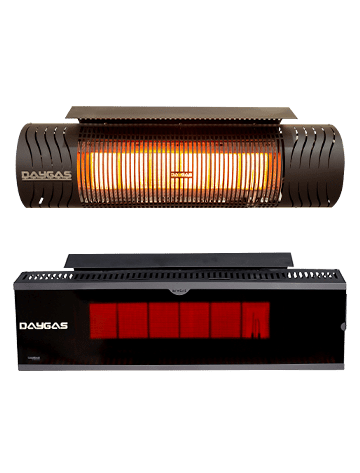
💡 Best For: Outdoor dining areas, warehouses, garages, production lines, and factories requiring zone heating.
🔗 Recommended Solution: DSR Ceramic Radiant Heater – A powerful infrared heating system for industrial and outdoor environments.
💡 Heater Types Comparison Chart
| Feature | Convection Heaters | Radiant Heaters | Infrared Heaters |
|---|---|---|---|
| Heating Method | Heats air and circulates it | Heats objects & surfaces | Directly transfers infrared radiation |
| Best For | Enclosed, well-insulated areas | Large, open spaces | Targeted, high-efficiency heating |
| Efficiency | Moderate | High | Very High (Up to 95%) |
| Response Time | Slower | Faster | Immediate warmth |
| Heat Loss Risk | High (heat escapes through air movement) | Low | Minimal |
💰 Cost & Energy Efficiency Considerations
✔ How to Choose the Most Cost-Effective Heater:
- ✅ Use convection heating for entire-room heating in fully enclosed spaces.
- ✅ Choose radiant heating for large spaces with frequent air circulation.
- ✅ Opt for infrared heating in targeted heating applications to reduce energy waste.
🔗 Read More: Infrared Heater Efficiency: Are They Cost-Effective?
🏢 Which Heating System Is Best for Your Business?
The ideal heating system depends on your facility’s size, structure, and heating needs.
- For uniform heating in enclosed spaces, a Lodos Gas Unit Heater provides consistent warmth.
- For efficient heating in large, open spaces, a Radium Radiant Tube Heater ensures cost-effective heat distribution.
- For targeted, high-intensity warmth, the DSR Ceramic Radiant Heater offers instant, energy-efficient heating.
📩 Need expert guidance? Contact our team for a custom heating solution tailored to your business needs.
📚 Resources & More Information
- U.S. Department of Energy – Energy-Efficient Heating Systems
- European Commission – Energy Efficiency in Buildings
- ASHRAE – Radiant Heating Overview
✅ FAQs
Which type of heater is the most efficient?
Infrared heaters are the most efficient heater types, as they provide direct, instant heat without warming unnecessary air.
Can infrared heaters replace convection heaters?
In large, well-insulated rooms, convection heating is more effective. However, in open spaces, infrared or radiant heating is the better choice.